
How India’s EV Industry is Taking Away Range Anxiety from Riders
- Published on Aug 28, 2026
- Read Time 7 mins
-

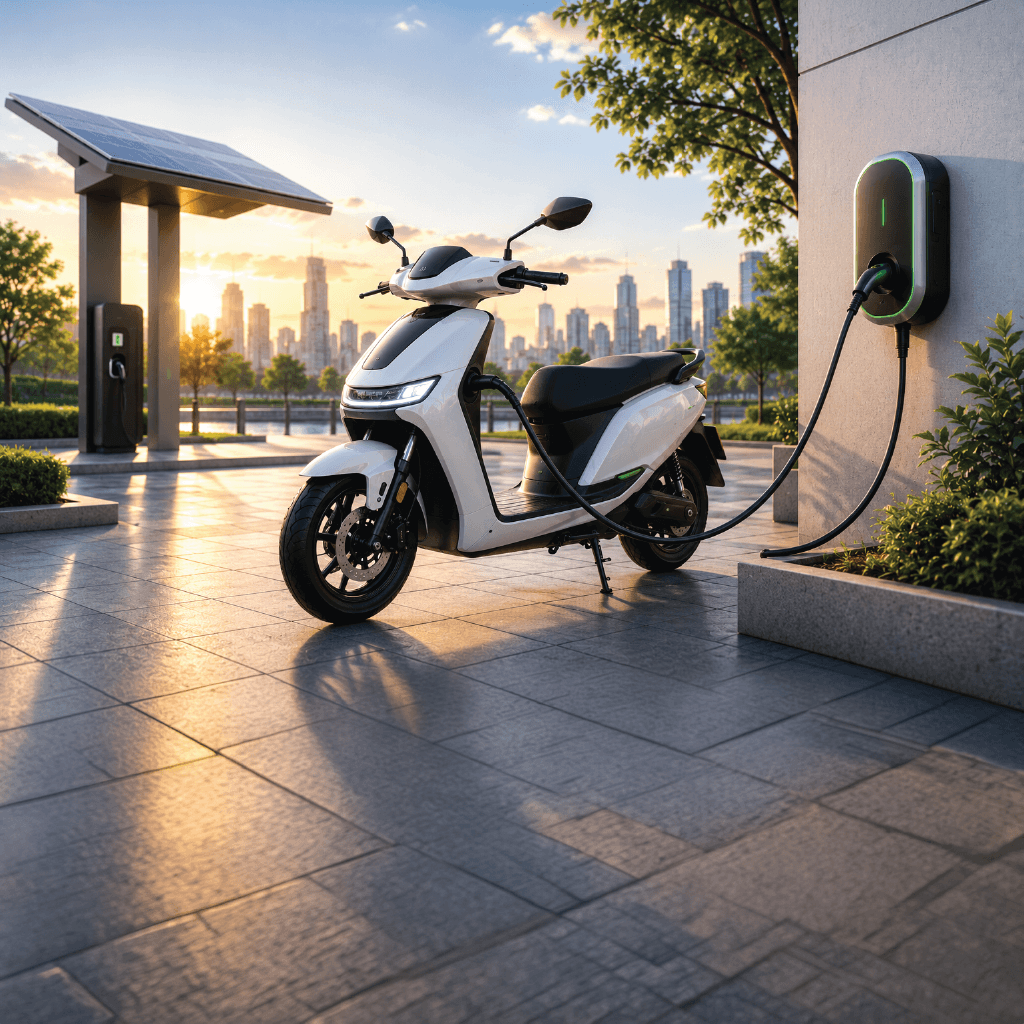
Buying an electric vehicle a few years ago was like a gamble. A frequent psychological worry was what riders would do if they were stranded on a highway or dark street with a dead battery. This is still called range anxiety. Though it was a valid concern for long, 2W-EV riders today don’t need to map trips around a scattered charging network.
The GHG-free automobile industry has released a series of quick infrastructural innovations. Favourable policy upgrades and incentives for new riders, along with energy-efficient and durability-based engineering innovations, have all improved the reputation of long-term EV use. Most importantly, the higher real-world ranges of today’s EVs are supported by an ecosystem that nearly nullifies the charging problem for a larger part of the population.
Increase in Highway Charging Infrastructure
The days of waiting 6 to 8 hours for a slow AC charge during a road trip have almost passed. High-power DC fast chargers (150kW and above) on major Indian national highways are changing this dynamic of intercity travel via EVs.
Major charging networks are already getting installed at hubs every 50 to 100 kms on high-traffic routes like the Mumbai-Pune Expressway, the Delhi-Agra Yamuna Expressway, and the Bangalore-Chennai route. These stations can juice up an EV battery to 80% in roughly 20 to 30 minutes. This is exactly how long a quick stop for lunch or a tea takes.
- Battery Swapping
While fast charging works brilliantly for personal four-wheelers, commercial fleets operate on a different clock. Time is literally money for delivery partners who rely on bike taxis and auto-rickshaws. They simply can’t afford to park for 30 minutes.
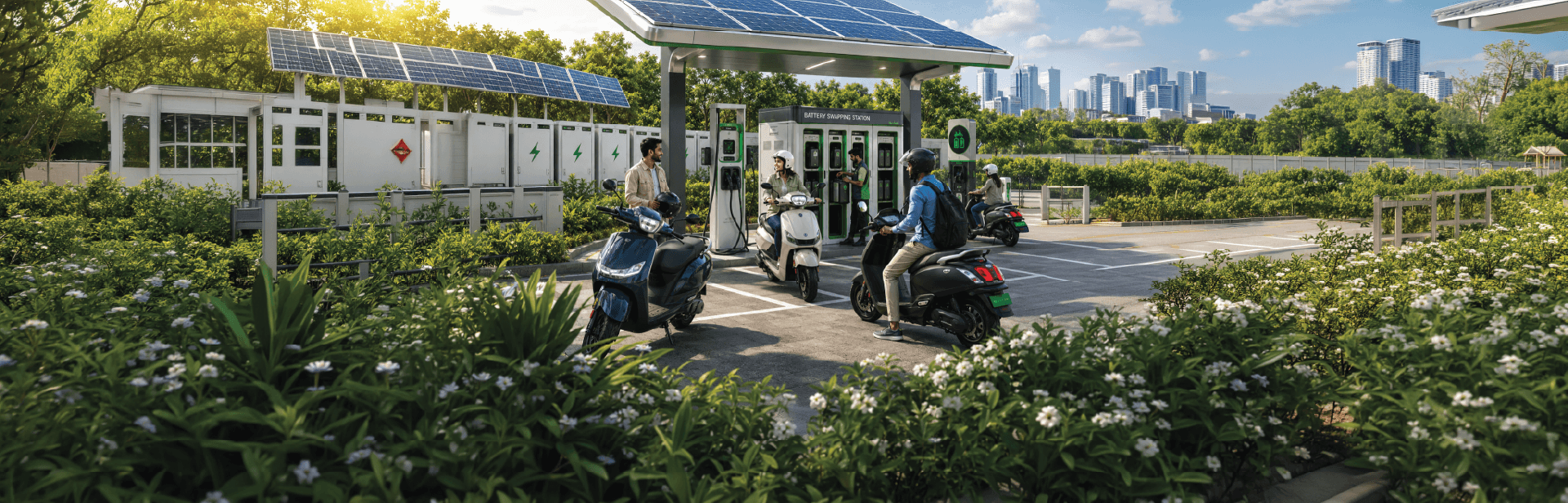
This is where the battery-as-a-service (BaaS) model via battery swapping stations comes in. Riders can quickly enter an outlet and slide out their empty battery for a fully charged, cooled battery that’s ready to power their EV. This is faster than refuelling a traditional petrol or diesel vehicle and eliminates the concept of range anxiety for intra-city logistics.
Also Read: Battery Swapping vs Charging Stations: What’s More Bankable?
Smart and Decentralized Solar-Powered Charging
The energy powering EVs needs to be as clean as the tailpipe emissions for true net-zero mobility. That’s where solar-powered charging stations solve two problems at once: grid congestion and carbon footprints.
Decoupling charging areas from their over-dependence on local electricity grids means more charging stations will use rooftop solar arrays with a mix of stationary battery storage. Clean energy becomes readily accessible even in areas that struggle with peak load fluctuations. This is a great approach for corporate parks, residential societies, and tier-2 or tier-3 towns.
Apply for a Solar Rooftop Loan
Wireless Inductive Charging (Ongoing Innovation)
Imagine charging your vehicle simply by parking it in a designated spot; no cables, plugs, or wear-and-tear from physical connectors. This is possible via wireless inductive charging pads that use electromagnetic fields to transfer energy from the ground directly to a receiver installed under the EV.
It’s still in the commercial scaling phase for premium segments and specialized urban transit buses. That being said, such wireless EV charging technology will improve convenience in smart-city parking lots and stop-and-go traffic zones over the years.
Make the Switch
The tech infrastructure is ready, and the vehicles are smarter than ever. The final piece of the puzzle is related to quicker adoption. Managing the immediate costs of moving your business or upgrading your personal ride shouldn’t cause financial anxiety to replace your range anxiety.
Whether you’re planning to deploy a full fleet of cargo 2-wheelers or 3-wheeler EVs, or bring home a brand-new EV 2-wheeler, personalized green financing makes the leap affordable. Custom financial solutions, like an Ecofy EV loan, offer optimized interest rates and flexible tenures designed to match your operational savings.
FAQs
Can I use any public charging station, or are they brand-specific?
EV 2-wheelers may not be compatible with every public charger. Charging requirements vary by model, connector and charging technology, so always check your vehicle's recommended charging options before using a public charging station.
Why is battery swapping mostly used for 2Ws and 3Ws instead of cars?
Two- and three-wheeler batteries are lighter and standardised, allowing commercial fleet drivers or delivery partners to swap them manually in under 2 minutes. Four-wheeler batteries are too heavy and structurally integrated into the chassis for quick manual swapping.