
Phishing vs Smishing vs Vishing (Different Types of Loan Scams)
- Published on Oct 13, 2026
- Read Time 7 mins
-

Data from the Reserve Bank of India (RBI) and the National Cybercrime Reporting Portal (NCRP) show that Indian citizens lost ₹22,900+ crores to cyber frauds in 2025. Though only 2%-4% of this represents loan scams, there are still a staggering 28.15 lakh registered complaints about fake loans.
Moreover, the Indian Cyber Crime Coordination Centre (I4C) has blocked 3,718 fraudulent apps and claimed to save around ₹11,100 crores of citizens’ money.
Remember, greater access to green mobility and solar usage across India gives fraudsters a larger target base of MSMEs, EV fleet operators, and homeowners. Cues like “instant green loan approvals” or urgent “electricity meter disconnection notices” are a clear red flag.
You may apply for an EV loan or green finance for a rooftop solar setup. Either way, understanding how social engineering attacks use phishing, smishing, and vishing can save you from green loan scams.
Phishing vs Smishing vs Vishing
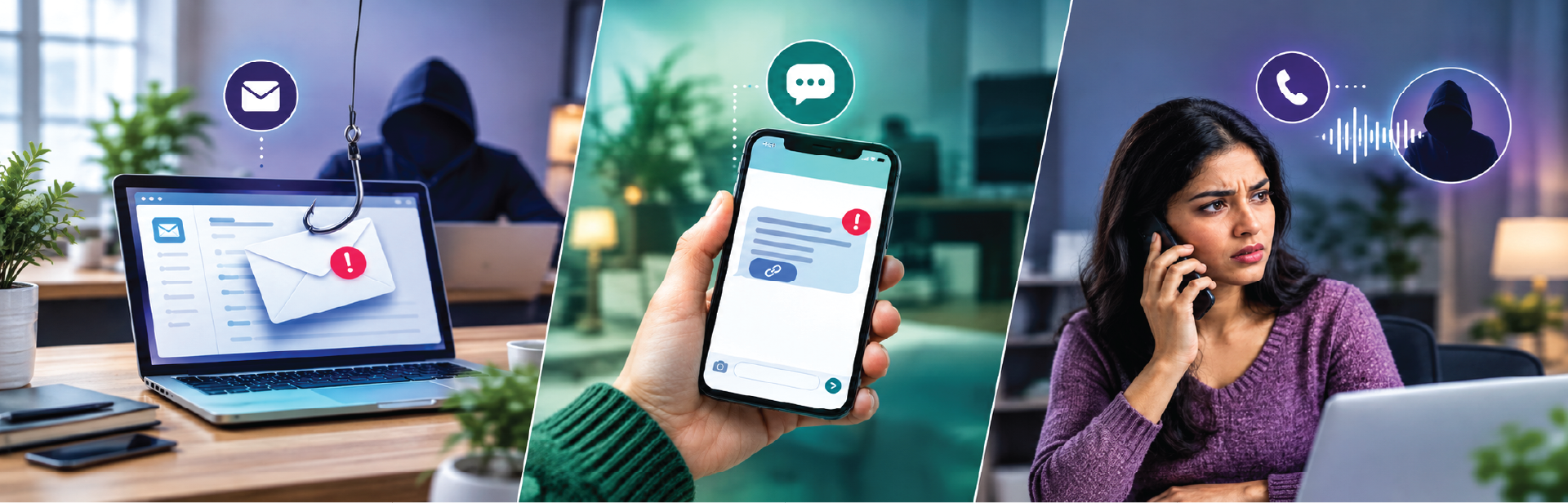
The goal of these loan scam techniques is to steal sensitive financial data, but their delivery medium varies:
Phishing (Email and Fake Websites)
This loan scam type uses fraudulent emails and cloned websites to threaten or impersonate. Many phishing loan scams also mimic legitimate banks or green NBFCs to lure targets with “unbeatable” interest rates.
You receive an email claiming your green SME loan application is provisionally approved. Such emails often use official-looking branding and direct you to a fake login portal prepared to steal your net banking credentials or business PAN details.
Smishing (SMS and Messaging Applications)
The smishing loan scam uses strategically timed text messages and WhatsApp messages based on your search activity and/or ad interests. Its core goal is to exploit our tendency to react quickly to mobile notifications.
A global cybersecurity and fraud prevention company, BioCatch, recorded a 146% spike in smishing loan scams. This easily makes it the fastest-growing attack vector. Beware of texts like, “Your rooftop solar DISCOM meter will be disconnected tonight due to unpaid bills. Click here to update KYC.”
Also Read: How to Spot and Avoid Loan Scams in Digital Lending
Vishing (Voice Phishing and Impersonation)
These are direct voice calls or automated IVR prompts. Loan fraudsters pose as RBI officers or loan verification agents. Some even play by the rulebook of cybercrime police.
They use high-pressure tactics over the phone by claiming an illegal transaction occurred in your name. Expect them to demand that you transfer money into a “temporary verification escrow account.”
Key Takeaways
Cybercriminals exploit human urgency rather than breaking system encryption. In financial loan scams, 25%-35% of fraudulent entries occur because borrowers are pressured into sharing an OTP.
Quick Comparison Table for Phishing vs Smishing vs Vishing
Here’s how these three attack mediums work to start and complete a green loan or ordinary loan scam:
| Threat Vector | Delivery Channel | Primary Psychological Trigger | Common Loan / Green Asset Trap |
| Phishing | Email, Malicious Web Portals | Curiosity / Professional Urgency | Fake loan sanction letters requiring an advance "processing fee." |
| Smishing | SMS, WhatsApp, Telegram | Panic / Fear of Disconnection | Urgency texts claiming "EV Charger Subsidy expiring in 2 hours." |
| Vishing | Voice Calls, Fake Executive Calls | Authority / Threat of Legal Action | Callers posing as bank auditors demanding OTPs to cancel a "fake transaction." |
Verdict
Always check the URL in your browser address bar and ignore shortened links like bit.ly or tiny url. Also, refuse screen-sharing requests and flag any communication asking you to download 3rd-party remote management software. Most importantly, report suspicious numbers or fake SME handles via the Department of Telecommunications’ Chakshu portal on Sanchar Saathi.
FAQs:
Whom do I contact for money lost via a digital loan scam?
Directly contact the national cybercrime helpline at 1930 or visit the National Cyber Crime Reporting Portal.
What should I do if I clicked on a suspicious smishing link?
Immediately disconnect your device from mobile data/Wi-Fi. Check your banking apps for unauthorized activity and change your online banking passwords from a clean device. Also, report the incident to your bank and the Cyber Crime Helpline at 1930.