
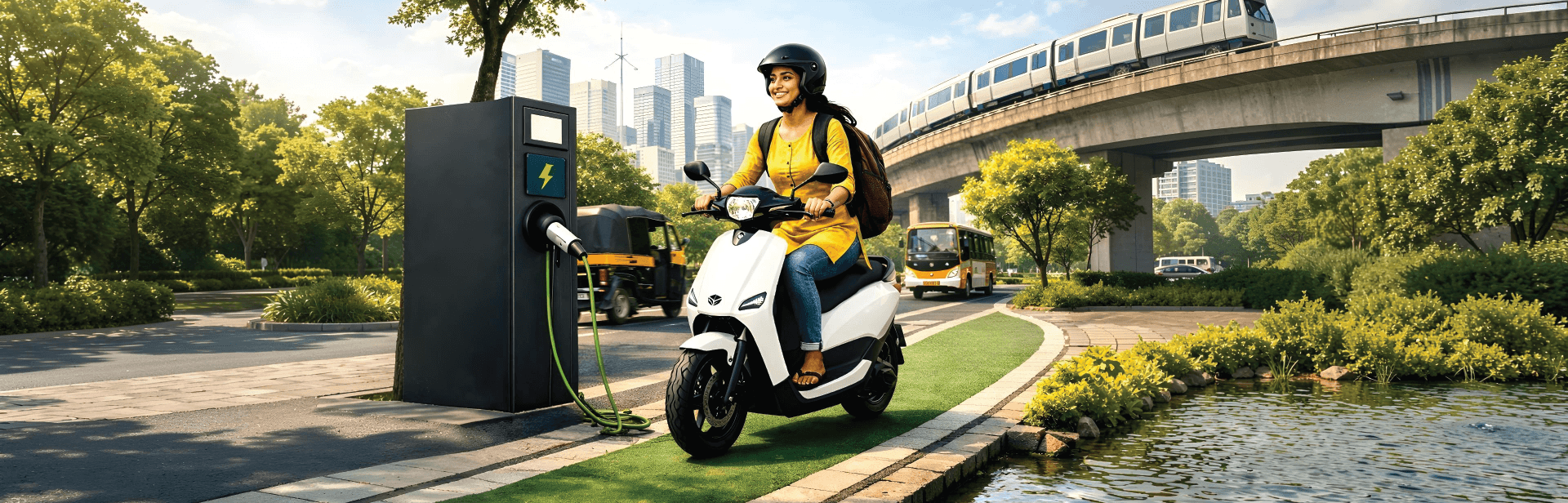
Top 5 Benefits of Switching to an EV Scooter in Cities
- Published on Jun 12, 2026
- Read Time 7 mins
-

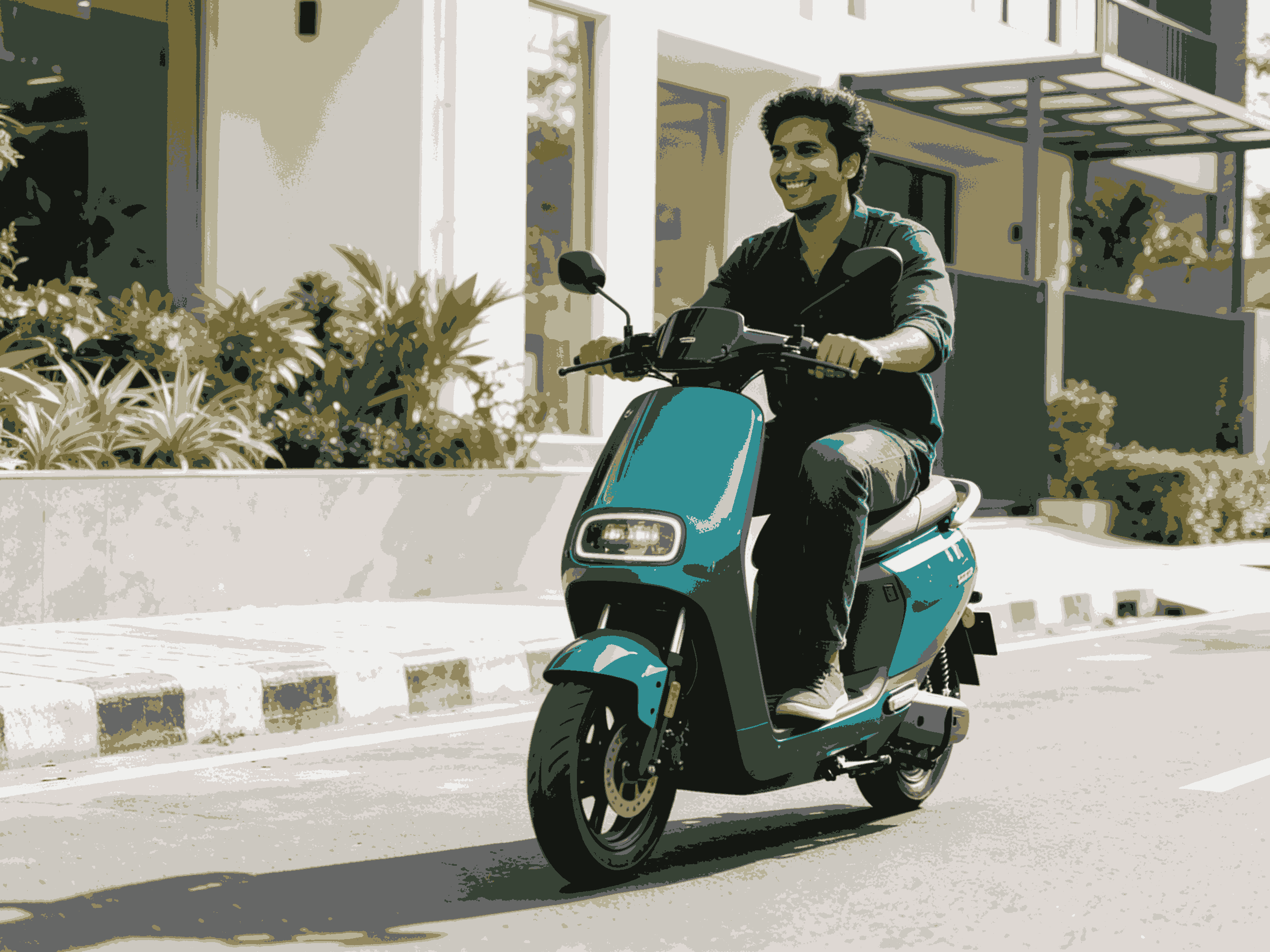
EV scooters in India were earlier treated as experimental city gadgets. Now that phase has zoomed past, EV buyers in 2026 are switching because they realise how ownership economics finally make sense.
Petrol scooters are becoming expensive to run in dense urban traffic. Daily stop-and-go riding burns fuel inefficiently as maintenance costs mount and unpredictable petrol prices make monthly budgeting harder.
Fortunately, electric 2-wheelers are solving these pain points together. Potential buyers have moved from “Should I buy an EV?” to “Which EV fits my usage pattern best?”
That’s a clear sign of eco-conscious and economically-conscious user preferences. Here are 5 benefits of EVs that make them highly suitable for urban rides:
1. Makes Financial Sense for Urban Riders
Most Indian 2-wheelers are used for office commutes, college travel, grocery runs, delivery work, and other short urban trips. This is the perfect performance category for EV scooters. Petrol engines are least efficient in heavy traffic because constant braking and idling waste fuel. Contrarily, EV scooters barely consume any energy when standing still, as the electric motor isn’t using up any power for propulsion.
If you or your fleet riders are covering 35-50 kms daily:
- fuel savings become visible quickly
- servicing frequency drops
- monthly commuting costs become more predictable
Note that the Ministry of Heavy Industries is still supporting EV buyers through the PM E-Drive. While this scheme reserves ₹2,000 crore for EV charging infrastructure and enough funds to cap at 24,79,120 EV 2-wheelers, the subsidies for scooters are expected to close by 31st July.
CTA: Explore EV Loans with Ecofy
2. Drops Maintenance Costs More Than Buyers Expect
This benefit is the primary dealbreaker. Though most buyers calculate fuel savings, fewer correctly calculate maintenance savings.
For instance, petrol scooters come with engine oil systems, filters, and additional spark plugs and clutch components that may often need repair. Don’t forget the overburdened exhaust systems and gearbox-related wear. Since EV scooters eliminate many of these components entirely, you’ll be relieved with much fewer garage visits and lower recurring servicing costs. What’s more, the vehicle’s long-term wear complexity also drops.
This matters greatly for delivery riders and high-usage commuters, as repair downtime will inevitably chew into their earnings.
3. Offers Battery Technology That Has Improved Faster Than Public Perception
A lot of Indian buyers still evaluate EV scooters using 2021 assumptions. However, it’s been half a decade, and the market has grown leaps and bounds. This is because today’s EV scooters come with:
- better thermal management
- smarter battery management systems (BMS)
- improved water resistance
- longer battery warranties
- safer cell packaging
Battery degradation still exists. But for typical urban use, degradation patterns are now far more stable than those of early-generation EV models. You can see the approved EV database by the Indian government if you’re looking for EV models certified for the PM E-Drive scheme.
4. Cancels Out “Micro-Stress” During Everyday Riding
This benefit needs to be highlighted to underscore the daily longevity of riding a scooter. You must already know that petrol scooters will create rider fatigue due to vehicular vibration and engine heat. Moreover, the brake modulation effort and noisy riding environments tend to keep your body and mind in a state of micro-stress.
EV scooters alter this riding experience entirely. Instant torque delivery makes traffic movement much smoother. The quietness of the ride might even help keep you from getting overly fatigued during long urban commutes. Even frequent breaking feels less mechanically harsh.
Give it at least 2-3 weeks to notice these changes. That’s how long many first-time EV users take to realise the difference in comfort.
CTA: What Borrowers and Insurers Should Prepare for in 2026 (for EVs)
5. Presents Easier Financing Options
Such an advantage has become more possible with time. EV financing in earlier times was treated much more cautiously because lenders lacked resale data and confidence in battery lifecycles. Also, the absence of insights on usage behaviour made it harder for them to give out green loans for EVs.
The tide has turned in favour of green lenders today. Most lenders now stick to evaluating the rider’s commuting patterns and the performance of their preferred asset category. Some even look into the borrower’s cash flows and the chosen EV’s battery warranty structures.
The result has expanded EV financing options, as EMIs are now structurally flexible and approval times are much faster. We consider this a top reason that EV adoption has crossed the boundary of metro cities and reached Tier-2 and Tier-3 markets.
Also Read: What Lenders Evaluate When You Apply for EV Loans (Beyond Credit Score)
Verdict
On a closing note, even the charging anxiety that EV scooter owners have is now more psychological than practical. The majority of EV users charge at home, at the office, or at overnight parking locations. And the average Indian urban commute often falls well within the range of modern EV scooters. Meanwhile, public charging expansion is accelerating under central and state-level EV infrastructure programs. If you’re looking for proof, Karnataka’s recent approval for 1200+ high-capacity EV charging stations should resolve your hesitation.
CTA: Speak to Green Loan Experts
FAQs
Are EV scooters actually cheaper over the long term?
For most urban commuters, yes. Lower fuel and maintenance costs usually improve ownership economics over time.
Is public charging still a major problem for EVs in India?
Charging infrastructure gaps still exist in some areas, but urban charging access is improving extremely fast across India.
Is green financing available for electric scooters?
Yes. Many lenders now offer dedicated EV financing with digital approvals and flexible EMI structures.