
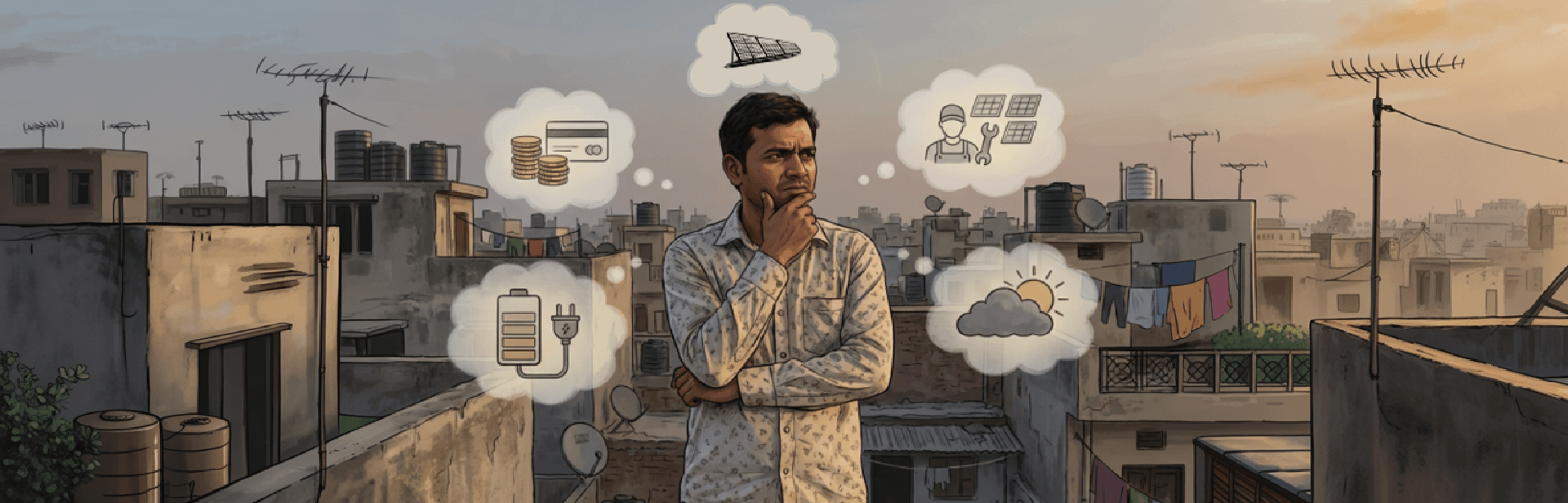
4 Myths About Rooftop Solar That Stop People from Going Solar
- Published on Apr 13, 2026
- Read Time 7 mins
-

The latest Nationally Determined Contributions (NDC) India shared for 2031-2035 expresses our nation’s intent to achieve 60% of electric power capacity from non-fossil fuel sources. This new target surpasses the previous 2030 goal of 50%, with renewable energy already accounting for over 52% of capacity as of February 2026. In terms of solar energy usage, the reality of its efficiency is unfolding on rooftops across India.
However, while 1000s of homeowners and MSMEs are slashing their electricity bills, many others remain on the sidelines. More than a lack of interest, this hesitation comes from a collection of “rooftop solar” myths passed down by uninformed generations.
Our team at Ecofy realises how these misconceptions create a “hesitation tax”. It includes the money you lose every month by paying for traditional power when you could be generating your own.
Let’s now debunk the five most common rooftop solar myths holding you back.
Solar Power is Only for the Wealthy
Solar has readily shifted from a luxury “green” statement to a practical financial tool. High upfront costs were a legitimate barrier a decade ago. However, the price of solar PV panels has fallen significantly.
More importantly, the increase in services for green finance has changed the maths. With customised rooftop solar loans, you no longer need a massive lump sum. By opting for an EMI-based plan, your monthly loan payment is often offset by the reduction in your electricity bill. In essence, the sun helps pay for your electricity system.
Also Read: The True ROI of Rooftop Solar
Cloudy or Cold Weather Will Stop Your Electricity Supply
Note that solar panels operate on light, not heat. It’s a common mistake to think panels need a scorching hot day to work. In fact, panels are actually more efficient in slightly cooler temperatures.
The photovoltaic (PV) technology captures energy from daylight (UV rays). Such UV rays also easily penetrate through cloud cover. Though electricity production may dip to around 10-25% on an extremely gloomy day, your power system will still work. This is why countries like Germany, which are far cloudier than India, are global leaders in solar energy.
Maintenance Will be A Constant Headache
Rooftop solar setups are arguably the lowest-maintenance green appliances you will ever own. Remember, a solar system has no moving parts, unlike a car or a generator. Thus, there are no motors to burn out or gears to lubricate. The “solid-state” nature of solar technology means there’s very little that can go wrong.
In the case of most Indian users, maintenance simply involves rinsing the panels with water every two weeks to remove dust and bird droppings. Since most tier-1 panels come with a 25-year performance warranty, the system is built to outlast almost all other appliances in your home.
Rooftop Solar Requires Massive Battery Banks
Net metering makes the “grid” your battery. Keep in mind that India’s rooftop solar capacity is mainly grid-connected, with 22 GW+ powered by the grid and approximately 1/4 of it from off-grid systems.
You may picture a room full of expensive, heavy lead-acid batteries. Though off-grid systems exist, most urban homes and businesses still use on-grid systems. Thanks to net metering, any excess power your panels produce during the day is sent back to the utility grid. Your meter literally runs backwards and gives you credits that you use at night. This eliminates the cost, space, and maintenance associated with large battery banks.
Also Read: Using Solar Energy to Charge Your EVs
Verdict
Also, if you’re among those families or businesses that think solar rooftop setups may damage your roofing and cause leaks, think again. The constantly growing number of professional solar rooftop installation services actually adds an extra layer of protection. Thus, rather than “glueing” solar panels to your roof, they are mounted on specialised racking systems secured to the structure. Even better, these mounts are weather-sealed.
Beyond this, the roof area directly beneath the panels stays shaded as the components absorb the extra heat. This could possibly extend the lifecycle of your roofing material and lower the temperature in the rooms below.
On a closing note, remember that the opportunity cost of waiting is the biggest risk of “going solar.” Every month you delay based on outdated information is another month of paying high utility tariffs. Don’t let solar myths control your monthly electricity budget.
FAQs
Can I run my AC or heavy appliances on solar?
Yes. Modern on-grid solar systems work in sync with the utility grid. During the day, your solar panels prioritise powering your heavy appliances (like ACs, geysers, or washing machines). If the appliances need more power than the sun is providing at that moment, the system seamlessly draws the "extra" from the grid without any interruption or flicker.
What is the "Payback Period" for solar systems in a typical Indian household?
On average, a rooftop solar system in India pays for itself in 3 to 5 years. Given that the systems are designed to last 25 years, this means you enjoy approximately 20 years of essentially free electricity after the initial investment is recovered.
What happens to my rooftop solar if I move houses?
Solar panels are modular and can be dismantled and reinstalled at a new location. However, it is often more financially beneficial to leave the system in place. This is because solar-equipped homes have a higher resale value and sell faster than those without.
How to apply for PM Surya Ghar Yojana?
Apply on pmsuryaghar.gov.in. After entering your Electricity Consumer ID, submit an application for Technical Feasibility. Once the DISCOM (electricity department) approves it, hire a registered vendor to install the panels and apply for a net meter. Submit your bank details and a cancelled cheque once the commissioning certificate is generated on the portal.