
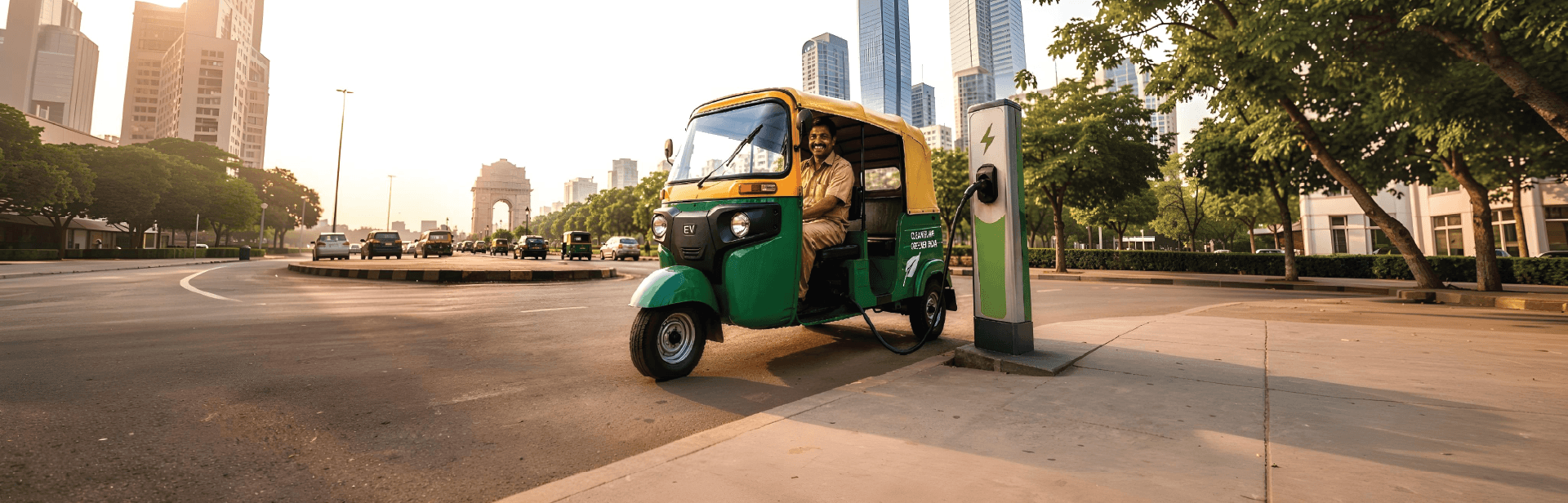
Electric Auto-Rickshaw (EV-3W) Financing and Savings Guide for India’s Motor Vehicles
- Published on Sep 29, 2026
- Read Time 7 mins
-

Over 60% of all new three-wheelers sold in India now come under the electric vehicles (EVs) category. Thanks to municipal corporations and more pro-green climate laws in India, cleaner mobility is being pushed. Even volatile fuel prices have partly contributed to this preference toward sustainable mobility.
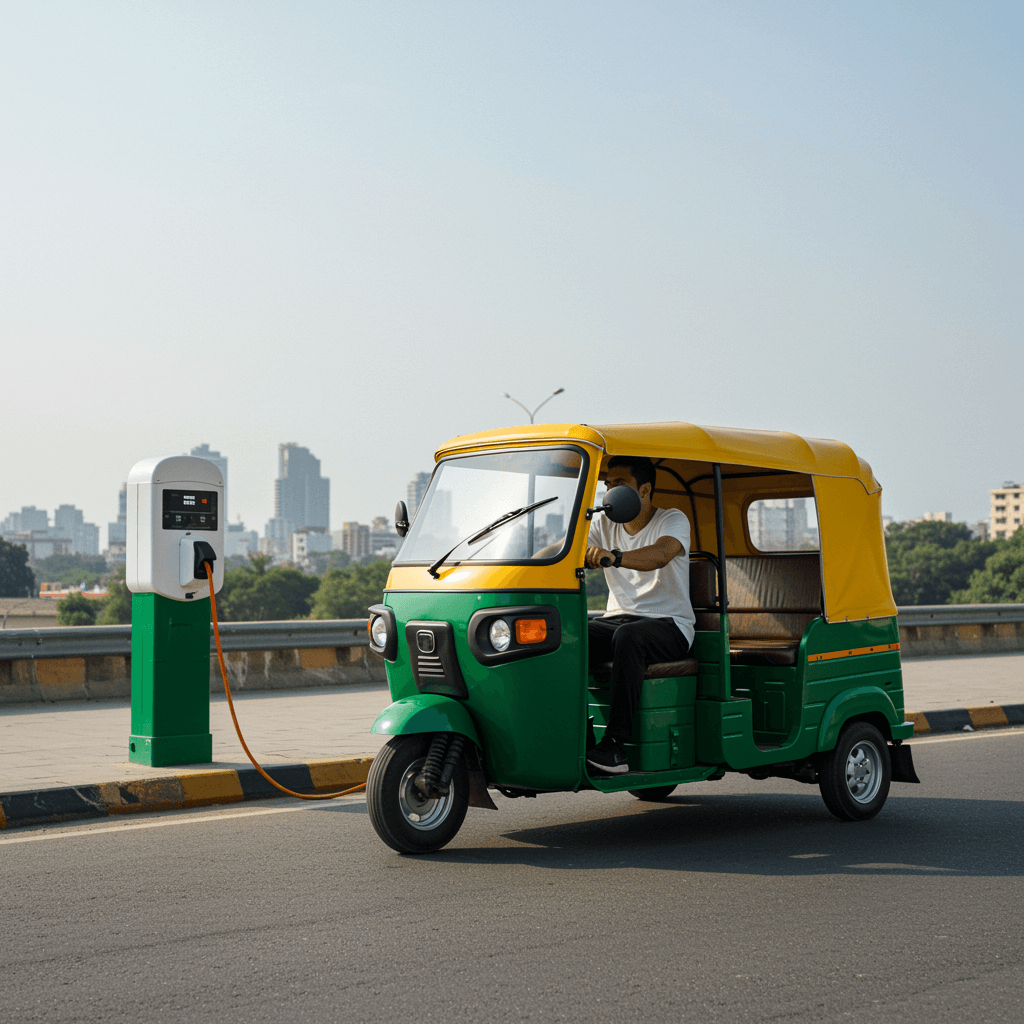
The central characters of this story are the lifeblood of last-mile urban transport: auto-rickshaw drivers. While the electric mobility decision is generally considered an environmental victory, for auto drivers this decision is purely economic. Switching from ICE vehicles to EV-3Ws will convert the daily fuel expenses into direct take-home earnings.
Let’s read more on how much they really save and how flexible green and EV loans power this transport choice.
Did you know that electric autos have around 1,500 fewer moving parts than ICE vehicles? This also means far fewer reasons for possible repairs.
Financial Comparison of Owning a Fuel-Powered vs Electric 3-Wheeler Vehicle
We agree that an EV-3W has a higher initial purchase price than a traditional petrol, diesel, or CNG auto. Yet, its Total Cost of Ownership (TCO) is better because of huge savings from Month
| Operational Metric | Petrol / Diesel 3-Wheeler | CNG 3-Wheeler | Electric 3-Wheeler (e-3W) |
| Average Purchase Price | ₹2.20 Lakh – ₹2.50 Lakh | ₹2.40 Lakh – ₹2.80 Lakh | ₹3 Lakh – ₹3.80 Lakh |
| Fuel / Energy Cost per km | ₹3.50 – ₹4.00 / km | ₹2.50 – ₹2.80 / km | ₹0.60 – ₹0.80 / km (Overnight AC) |
| Monthly Fuel Expense (3,000 km) | ₹10,500 – ₹12,000 | ₹7,500 – ₹8,400 | ₹1,800 – ₹2,400 |
| Monthly Maintenance & Repairs | ₹1,500 – ₹2,000 | ₹1,200 – ₹1,500 | ₹400 – ₹600 |
| Estimated Monthly Loan EMI | ~₹5,500 | ~₹6,200 | ~₹8,500 |
| Average Gross Monthly Revenue | ₹36,000 | ₹36,000 | ₹36,000 |
| Net Monthly Take-Home Profit | ~₹17,000 | ~₹20,000 | ~₹24,500 (+25% to 40% Increase) |
An electric auto-rickshaw driver saves approximately ₹6,000 to ₹8,000 every single month on fuel and maintenance alone. Over a 3-year loan tenure, these operational savings handle the higher upfront purchase price and double the driver’s earnings over their lifetime.
Fixed Charging vs Battery Swapping for Different EV-3W Purposes
You can choose between fixed charging and instant battery swapping for EV-3Ws based on whether you’re running an EV fleet or want to use a single EV for daily passenger commutes.
The fixed-battery model is best for overnight charging. Such EVs come with built-in lithium-ion batteries with capacities of 8Wh to 10 kWh. This works as long as you plug into a standard 15A socket overnight. What’s best, this offers the lowest operational running cost per kilometre and is a great choice for drivers running single shifts (80 km to 120 km daily).
Another option is the 2-minute battery-as-a-service (BaaS) or swapping model. Here, you buy the new 3W-EV without the battery. This drops your initial EV-3W loan amount and EMIs by up to 40%. Also, some of these common battery-swapping network subscriptions are Battery Smart or Sun Mobility. The best perk here is the zero downtime. Quickly swapping the battery for a fully charged unit allows for nearly double-shift operations (180+km daily).
Finance Your Electric 3-Wheeler with Ecofy
Apply for an EV Loan to Avoid the Classic Financing Problem
Traditional commercial banks once hesitated to finance auto-rickshaw drivers because of tight income-paperwork rules. However, specialized NBFCs like Ecofy have made EV-3W financing more accessible by creating credit models that support MSMEs with EV fleets and also informal transport workers.
With green loans for EV rickshaws available at upfront down payments of as less as ₹20,000–₹30,000, the added feature of micro-repayments from their digital earnings wallet makes it even easier. Add in the perks of government incentives under state EV policies, and the total loan requirements are much more manageable.
Note: Choose your L5 high-speed commercial electric 3-wheeler from an authorized dealership and allow them to link your loan support to Ecofy.
FAQs
Can I get an EV loan if I don't have a formal salary slip or ITR?
Yes. Specialized green NBFCs like Ecofy also cater to self-employed auto drivers. Approvals are based on commercial driving credentials, local residence verification, and bank cash flows rather than formal income tax returns.
How long does an electric auto-rickshaw battery last?
Modern commercial L5 electric 3-wheelers use Advanced Lithium Iron Phosphate (LFP) batteries rated for 3,000+ charge cycles. This lasts 5 to 7 years under normal daily operations. Most manufacturers offer a 3-year or 80,000 km standard battery warranty.