
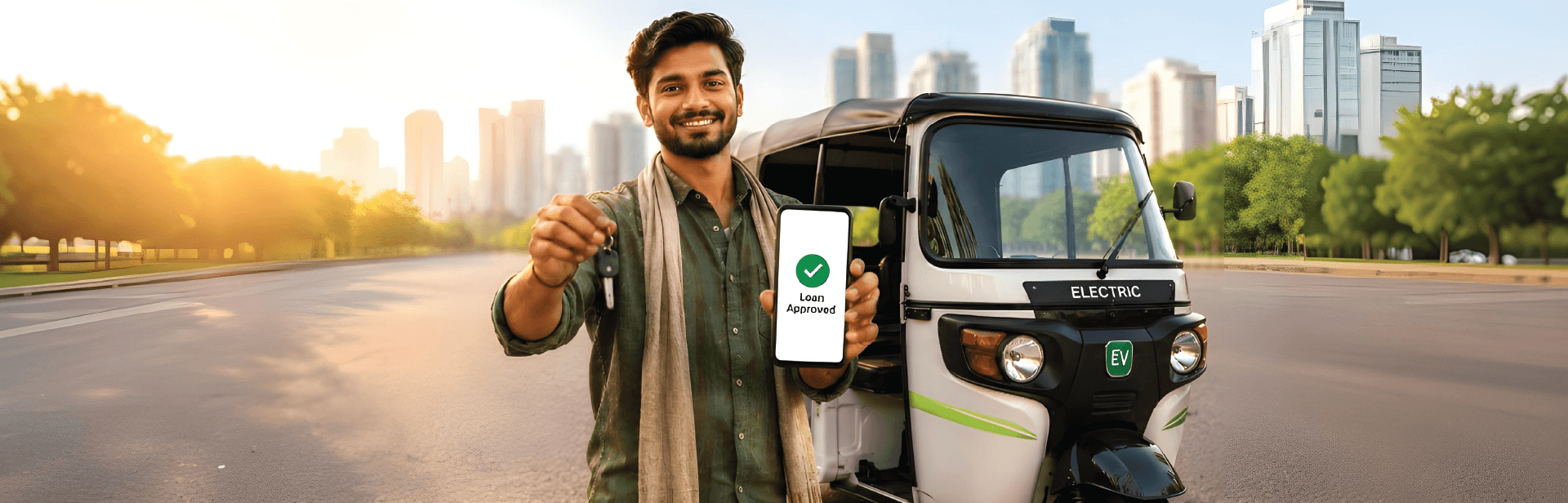
Is an EV 3-Wheeler Loan Worth It for First-Time Auto Drivers?
- Published on Jun 19, 2026
- Read Time 5 mins
-

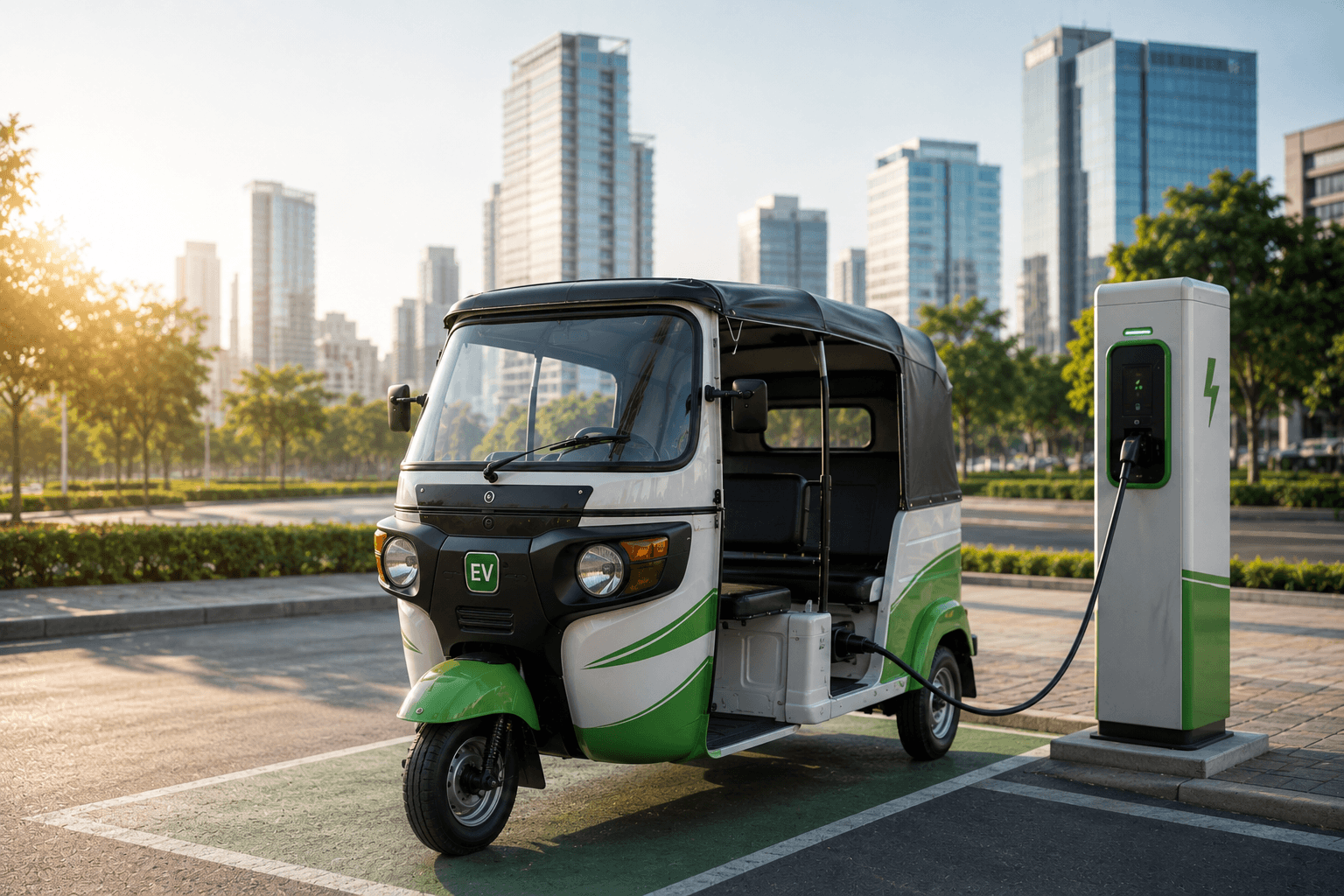
India’s electric 3-wheeler market has boomed because the operating economics of commercial driving are fundamentally different from those of personal vehicle ownership. A CNG-powered auto-rickshaw might survive on the economics of occasional usage. But an EV 3-wheeler survives on daily utilisation economics.
The more kilometers driven, the wider the savings gap.
This is one reason electric 3-wheelers continue leading India’s EV adoption numbers. According to the Government of India’s Vahan portal, electric 3-wheelers consistently rank among the strongest EV registration categories in the country.
However, first-time drivers still need to carefully evaluate one thing. It’s whether the EMI structure matches real earning patterns. This is because commercial EV ownership is profitable only when repayment planning is realistic.
Where EV 3-Wheelers Usually Make Financial Sense
Electric autos tend to work best in high-frequency urban routes and last-mile connectivity. If short-to-medium commercial trips are a frequent use case, EV 3Ws are still a good option. Note that these vehicles benefit heavily from:
- lower running costs
- lower idle losses
- reduced servicing complexity
- fewer engine-related maintenance expenses
Commercial auto drivers typically operate for long daily hours. That means fuel savings accumulate much faster than they would for private users. For many drivers, the biggest financial change happens in their daily operating expenses.
Daily Cost Running Reduction (Biggest Advantage)
However, this only works if:
- charging access is practical
- route distances fit battery range
- downtime remains manageable
First-time buyers often underestimate the importance of route planning in commercial EV operations. It’s in your best interest to calculate a few specific numbers before taking an EV 3W loan. From your expected average daily kilometres to idle time between trips and realistic monthly utilisation, these ranges give you an idea of your green asset’s earning potential. Also, your loan will only be worthwhile when utilisation remains consistently healthy.
Also Read: How EMI Structures Differ for 2 and 3-Wheeler EV Loans
Battery Economics Matter More Than Vehicle Price
First-time e-auto drivers tend to focus too much on down payments and EMI amounts. But a real long-term calculation should include specifics about the duration of the battery’s warranty. Even better, you should be informed about expected charging cycles and also have visibility into replacement costs. Most importantly, if your battery service network's quality is poor, you’re likely to run around in case of a battery change or repair.
Although today’s EV 3Ws have improved considerably in water resistance and load handling, battery quality still varies by manufacturer. Always review the terms of battery warranty and also the range of authorised service locations before finalising your EV 3-wheeler loan. Otherwise, a lower EMI on a weak ecosystem can become expensive later.
Better Structure in EV 3-Wheelers Financing
A few years ago, green lenders hesitated to finance electric commercial vehicles because resale data was limited. The added uncertainty around battery performance and the lack of insights into commercial repayment behaviour also led to a lack of long-term visibility. Luckily, this has changed.
Lenders will now look into your route stability and approximate daily earnings. Beyond this, they’ll also assess your access to charging ecosystems and the performance of your exact chosen asset category.
As EV adoption grows across India, Ecofy continues supporting electric 3-wheeler ownership through digital-first financing journeys tailored for modern commercial mobility.
Speak to Our Green Loan Manager
What Drivers Miscalculate When Taking Green Loans for EV 3-Wheelers
The biggest mistake is assuming that lower running costs automatically mean higher profits. Remember that commercial EV ownership still depends heavily on route discipline and vehicle uptime. Additionally, your charging planning ethics and repayment timing will decide how your green loan clearance turns out.
Some drivers overestimate daily trip volume during loan applications. Others underestimate seasonal earnings fluctuations. You must choose EMI structures that survive weaker earning months.
Also Read: 5 Common Loan Blunders to Avoid
FAQs
Are EV 3-wheelers cheaper to operate than petrol autos?
In many urban commercial usage cases, yes. Lower fuel and maintenance costs will improve operating economics significantly.
Is green financing available for first-time EV auto drivers?
Yes. Many lenders now offer structured EV 3-wheeler financing and digital loan approvals.
What should drivers check before taking an EV auto loan?
Battery warranty, charging access, EMI affordability, route stability, and service network quality.
Do EV 3-wheelers require less maintenance?
Generally yes. They have fewer moving mechanical components than traditional fuel-based autos.
Is the charging infrastructure improving for commercial EVs?
Yes. Government-supported charging expansion under PM E-DRIVE is improving commercial EV infrastructure across India.