
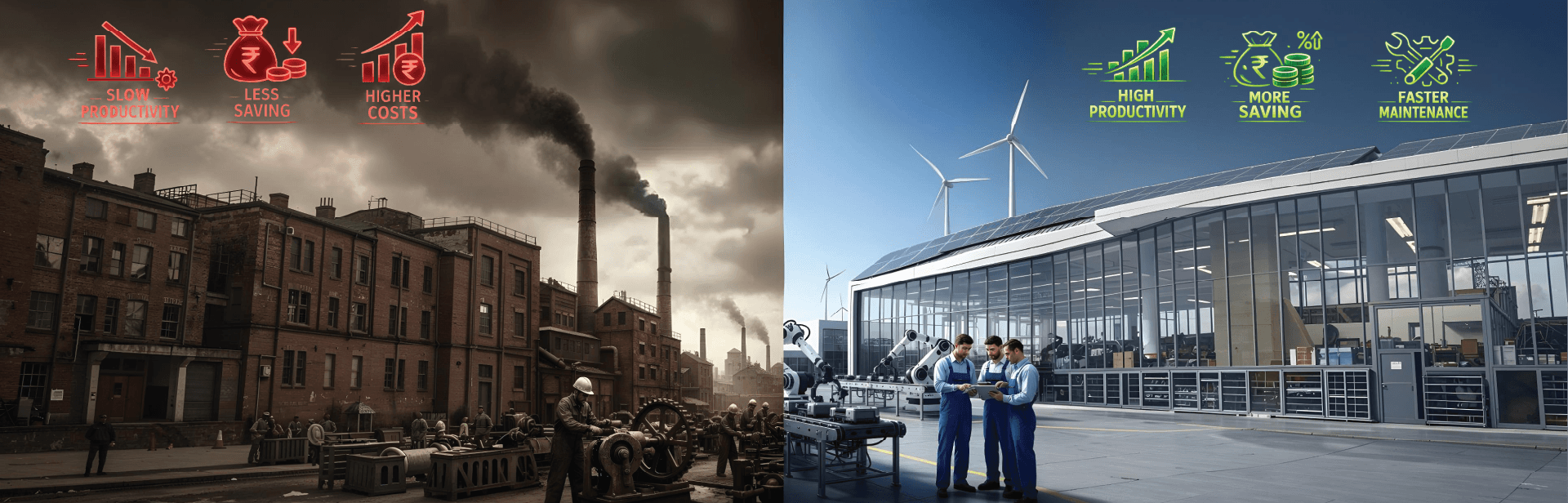
Old Machines vs Energy-Efficient Upgrades (Factors to Consider and Cost Comparison for SMEs)
- Published on May 12, 2026
- Read Time 7 mins
-

Old electrical and tech equipment often lies collecting dust on cluttered tables in office spaces. Their inefficiency in performing basic functions makes them an added expense to your electricity bills. In fact, most Indian manufacturing units and SMEs have such old machines that everyone treats them like a reliable veteran.
However, electricity tariffs have continued to surge in 2026 as well. Global supply chains now demand greener footprints and better power management. Such a situation has made your old machine more like a relic that bites into your margins from the inside out.
From a business perspective, the machine’s real cost is what you pay to keep it running today. What you paid for it 10 years ago is nearly irrelevant now. That’s where Ecofy can help your business stop this energy and cash drain. By financing your SME’s upgrade to greener, more energy-efficient equipment, you get better control over your cash flow and stay competitive in a high-voltage market.
The Power Gap
Old motors and compressors or HVAC systems are notorious for energy leakage. Unlike modern SME machines, older machines lack the ability to modulate their power intake. This means they will often run at 100% capacity even when the workload only requires 50%.
- Modern energy-efficient machinery (rated IE3 or IE4) can reduce power consumption by 25 to 50% compared to decade-old models.
- SMEs with a monthly electricity bill of ₹2 Lakhs will save around ₹60,000 (30% savings) of their working capital every single month. Do the math over a year, and that’s around ₹7 lakh INR per year.
Also Read: 5 Common Credit Myths MSME Owners Still Believe
Maintenance
While old machines use more power, their tendency to die out or slow down also demands more professional attention. This turns into avoidable expenditures and adds to your payroll costs associated with old equipment. In short, it costs your staff the hours spent troubleshooting the machine’s issues rather than producing sellable goods.
Equipment older than 7-8 years will inevitably face frequent breakdowns. As their specialised parts are taken down from production lines, finding spare parts becomes harder and more expensive. Moreover, the recurring problem of “emergency repair” fees will continue to disrupt production cycles.
Precision and Rejection Rates
Precision is non-negotiable in manufacturing plants. Whether your SME is in textiles, plastics, or precision engineering, the drift and lags in old machinery will blindside you from your actual profit potential. Then there’s the issue of tolerance errors. The higher mechanical malfunction in older machines means SMEs will start seeing higher rates of rejected goods.
The saviour here is quality efficiency. Energy-efficient upgrades are typically more precise. When you reduce your rejection rate from 5% to 1%, you’re increasing your sellable inventory without increasing your raw material costs. You effectively get “free” product out of the same input.
Also Read: The True ROI of Rooftop Solar
Carbon Tax and Market Access
If you’re an SME looking to export or supply to large MNCs, your energy intensity is now a serious parameter during their carbon audits. Green procurement channels are now given greater priority as global buyers track their suppliers' carbon footprints. Sticking with old, inefficient machines could literally cost you your biggest contracts.
As carbon border taxes become a reality for export readiness, energy-efficient production is the only way to keep your export prices competitive. An upgrade today is like an insurance policy for your market share tomorrow.
Detailed Cost-Benefit Comparison of Old Machinery and Energy-Efficient Equipment for SMEs
Financial Driver
Old Machinery (10+ Years)
Energy-Efficient Upgrade
Power Consumption
High (High starting current/leakage)
Low (VFD integrated/IE4 standard)
Operational Costs
Rising (Due to annual tariff hikes)
Stable & Optimised
Downtime
Frequent & Unpredictable
Minimal (Predictive alerts)
Tax Benefits
Depreciated (Zero benefit)
Section 32 Depreciation benefits
Financing
Hard to secure against
Output Quality
Variable (High Rejections)
Constant (High Precision)
High-efficiency Motors and VFDs
Most SMEs don't need to overhaul their entire factory floor overnight. The most effective first step is often upgrading to IE3/IE4 motors equipped with Variable Frequency Drives (VFDs). A VFD allows the motor to adjust its speed based on actual demand and prevents the massive energy spikes typical of older "on/off" systems. This single change may result in an immediate 20% drop in energy costs.
Even better, the Indian government now incentivises an SME's decision to use green technology. Section 32 of the Income Tax Act allows SMEs to claim accelerated depreciation on energy-saving devices. This means you can write off the cost of the machine faster, reducing your taxable income and improving your bottom line in the very first year of purchase.
Also Read: How Supply Chain Finance Improves Cash Flow Without Increasing Debt
FAQs
The upfront cost of energy-efficient equipment is high. How do I convince my partners?
Show them the Payback Period math. Most energy-efficient upgrades pay for themselves within 18 to 36 months solely through electricity savings. After that, the machine is essentially "printing money" for your business for the next 10 years.
Do I have to replace my entire SME equipment line?
Not at all. Conduct an energy audit to identify the "energy guzzlers." Start with high-draw equipment like air compressors or boilers. A phased transition allows you to use the savings from the first upgrade to fund the second.
Are energy-efficient machines harder to operate?
Actually, they are easier. Most modern upgrades feature digital interfaces and automated controls that reduce the need for manual "tweaking," allowing your skilled labour to focus on quality control rather than machine troubleshooting.