

Role of Electric Rickshaws in Sustainable Urban Transport in Tier-2 India
- Published on May 25, 2026
- Read Time 5 mins
-

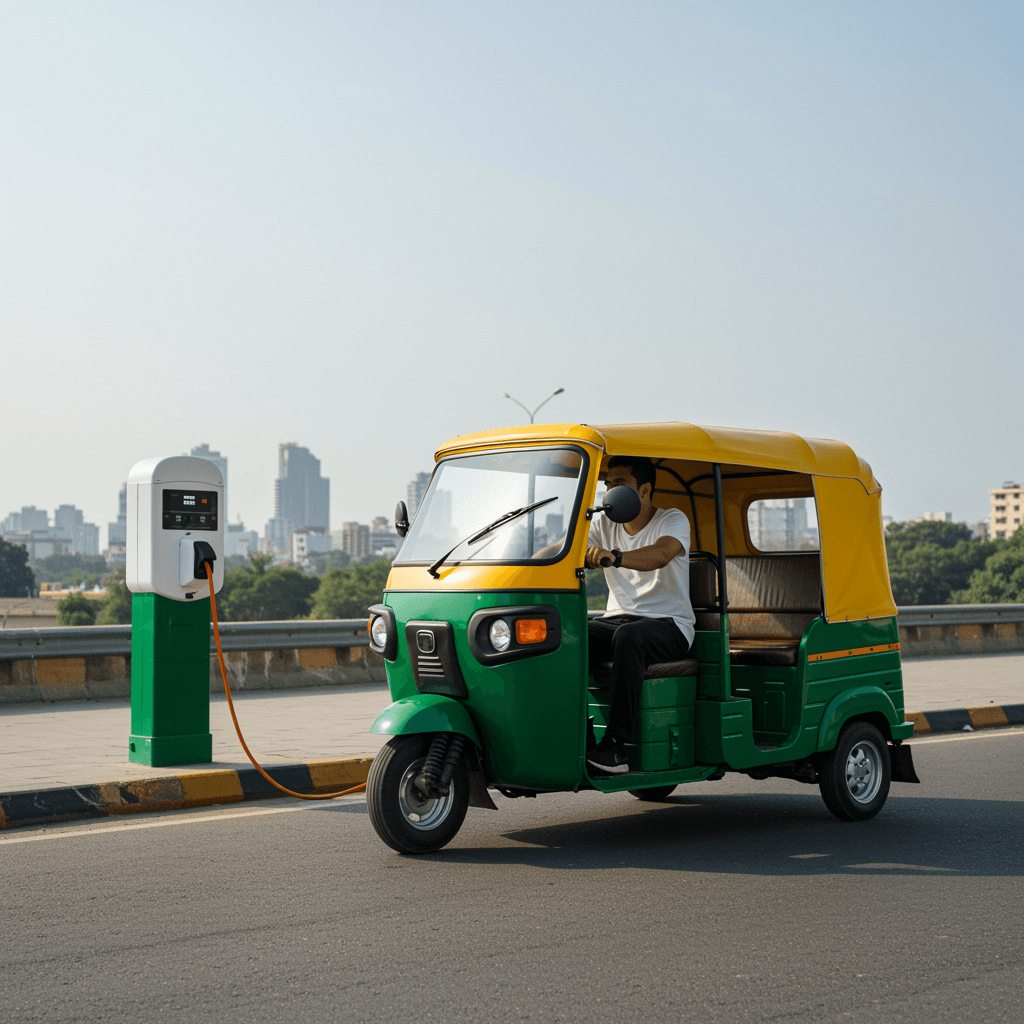
Electric (3W) rickshaws in metropolitan giants like Delhi or Mumbai are viewed as secondary vehicles, taking low priority in mass transportation. While metros, local trains, and buses are still preferred, e-rickshaws are starting to become a last-mile connectivity solution.
But step into a tier-2 city like Lucknow, Indore, or Ranchi, and the transportation narrative seems to lean towards eco-friendliness. Here, formal bus networks are sparse, and metro projects are still in their infancy. However, e-rickshaws are now a hyper-local lifeline.
While auto-rickshaws carry around 110 million people daily, e-rickshaws take up 60 million people from this quota. Such numbers prove how they've out-scaled several state-subsidised public transit projects. Most importantly, as India steadily moves towards its greener transport infrastructure goals in 2026, we're seeing a more bankable version of 3W e-rickshaws.
Upgraded Technical Strengths
Until recently, the 3W EV market was a wild west of unorganised parts. But the present formalisation is turning parameters in favour of sustainability through two innovations:
- Smart Telematics and IoT: New-age electric vehicles (3W) are now fitted with sensors that track battery health and route efficiency. Green loan providers like Ecofy use this data to decide on lower interest rates or instant loan approvals. What's best, the sensor data makes it simpler to view an unorganised asset as a transparent one. Thus, the lower the chances of vehicle damage, the better green loans buyers can access.
- High-Performance Motors (1000W Standard): The EV market has shifted toward higher-capacity motors that take care of energy efficiency and strong torque together. This allows e-rickshaws to easily handle the common semi-paved and uneven roads of India without compromising the vehicle’s battery life.
CTA: Apply for an EV-3-Wheeler Loan
Battery-as-a-Service (BaaS)
The biggest hurdle for tier-2 EV 3W drivers was the 8-hour charge time. But the arrival of the battery swapping era has solved this problem.
- The downtime for recharging has been reduced by over 95% thanks to battery-swapping stations. Companies like Battery Smart and SUN Mobility have saturated cities like Agra and Jaipur, enabling drivers to exchange a depleted battery for a fully charged one in under 2 minutes.
- By separating the battery (which accounts for 40% of the cost) from the vehicle, the upfront loan amount is smaller. Borrowers can now apply for a chassis-only loan to de-risk their loan. This significantly improves green loan eligibility for first-time drivers.
PM E-DRIVE Incentives
The Indian government has doubled down on this segment with the PM E-DRIVE Scheme. It now extends incentives for e-rickshaws until March 2028.
As a targeted subsidy, the scheme aims to incentivise 3.2 lakh e-3Ws by focusing exclusively on commercially registered vehicles. Moreover, there's a new ease in the registration process. Many Tier-2 municipal corporations now offer "Green Permits." These are faster and cheaper to obtain than traditional permits for diesel autos. What's more, it makes e-rickshaws the default choice for new entrepreneurs.
Also Read: Battery Stations vs Charging Stations: What's More Bankable?
Inclusion at Eye-Level
E-rickshaws are doing what buses struggle to do: penetrate the hyper-local economy. More than just passengers, e-loaders are also the spine of tier-2 ecommerce. Operating at 1/6th the cost of diesel autos (roughly ₹0.50-₹0.70/km vs ₹3–₹4/km), these vehicles ensure small businesses stay profitable while fuel prices hike.
Above this, many NGOs and microfinance institutions in smaller cities are offering subsidies to women e-rickshaw drivers. This creates a new wave of financial independence in rural and semi-urban India.
FAQs
Are e-rickshaws sturdy enough for the "rougher" roads of Tier-2 cities?
Modern L5-category e-rickshaws are built with reinforced chassis and better suspension specifically for Indian conditions. Choosing a model from a reputed OEM ensures the vehicle can handle the "pothole test" of a developing city.
How do I manage EV charging if my city has frequent power cuts?
This is why battery swapping is essential. Swap stations usually have industrial-grade power backups to ensure that even if your home electricity is out, your vehicle stays on the road and your earnings don't stop.
Also Read: How Electric 3-Wheelers Put More Money Back in Your Pocket